From print to digital: the evolution of press rooms at major events
The images from the Intesa Sanpaolo Publifoto Archive on display at Gallerie d’Italia – Milan until 3 May 2026 recount the 1956 Winter Olympics in Cortina d’Ampezzo, highlighting the many differences from today — from the lifestyle and clothing of the athletes to the materials used
The exhibition “La strada per Cortina. VII Giochi Olimpici Invernali 1956” (The Road to Cortina. VII Olympic Winter Games 1956), curated by Aldo Grasso, reveals how the media of the time covered sporting performances and results, but also the atmosphere and spirit surrounding the Olympic events.
This focus also sheds light on the presence of women journalists at those Games – very few overall, including only one Italian journalist: Giovanna Mariotti, local correspondent for the magazine “Cortina”
**
6 February 2026
The Press Room at the 1956 Winter Olympics
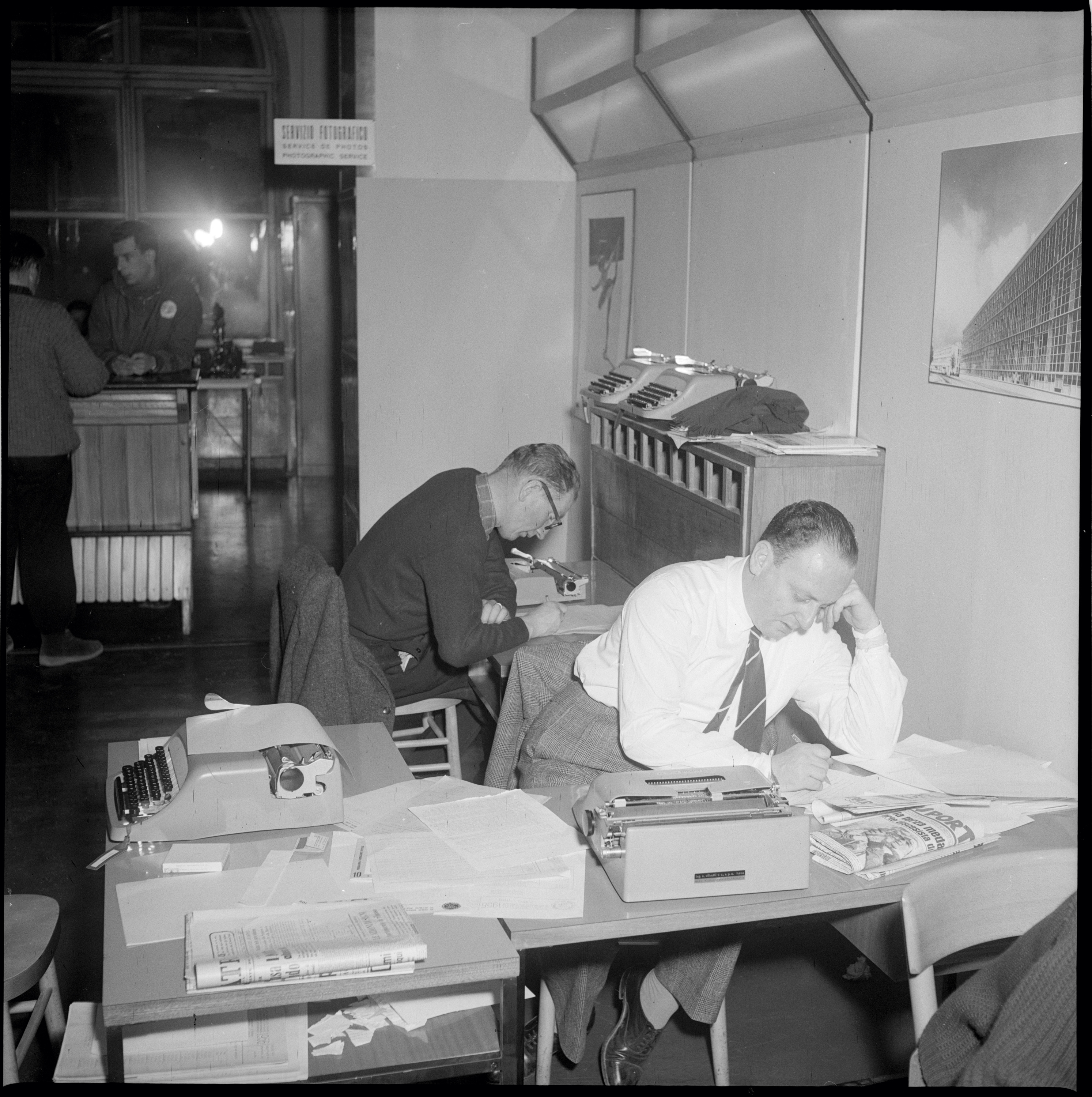
At the 1956 Winter Olympics in Cortina, journalists – and the very few women journalists among them, including the only Italian, Giovanna Mariotti*, local correspondent for the magazine Cortina – crowded into the Olympic press room, their reporting relied on typewriters, telegraphs and large amounts of paper.
Every result, every piece of news had to be typed, corrected by hand, and sent to national newsrooms by cable or telephone.
*Antonella Stelitano, Adriana Balzarini, Le donne di Cortina 1956, Minerva Soluzioni Editoriali, Bologna, 2025
It was a world in which speed was measured in keystrokes per minute and in the ability to compose text without the possibility of revising it.
In the Olympic press room of the time, technology was essential yet basic: typewriters, telegraphs and telex to transmit copy, and wired telephones to contact newsrooms.
The challenge was not only to report the facts, but to ensure they reached editorial desks quickly and accurately.
The Era of Electronics: the 1980s–1990s
With the advent of the first computer networks and digital devices, press rooms gradually began to change. Typewriters were soon joined – and eventually replaced – by computers equipped with modems, which allowed texts to be transmitted directly via email or dedicated lines.
The transition was gradual. Many workstations still included landlines, fax machines, and analogue modems. But for the first time, journalists could send digital content, significantly accelerating the speed of production and dissemination. Photographers and videographers also began transmitting images directly to newsrooms.
The Digital Age: from 2000 to Today
Today, the press rooms of major sporting or cultural events have completely changed. The images and setups on display bear almost no resemblance to those from Cortina 1956.
Today’s media centres offer computers, high-speed internet connections for rapidly sending high-definition photos and videos, multiple monitors and large screens, professional microphones, webcams, and audio devices for recording interviews and press conferences. Statistics, tables, and data are available in real time. Live audio and video feeds from competition venues allow journalists to write and publish in real time across platforms and websites. Smartphones themselves have become tools for both production and publication.
Journalists no longer send plain text via telex: they create and transmit full multimedia content – text, photos, videos, audio – published simultaneously on websites, social media platforms, newsletters, and apps. Technology now guides the production and distribution of content, as well as the interaction with audiences.
Conclusion
From the sound of typewriters and telex machines in Cortina 1956 to the digital media centres of Milano Cortina 2026, the transformation has been enormous. Today’s press rooms are true Media Centres, where journalists from all over the world have access to every possible tool to work at their best. The way journalists work, the speed of publication, and the nature of content have changed profoundly. What remains unchanged is the mission: to recount the stories and extraordinary feats of the athletes, and the timeless magic of the Olympic Games.
In the photo gallery: scenes from the press room and journalists at work during the 1956 Winter Olympics in Cortina.
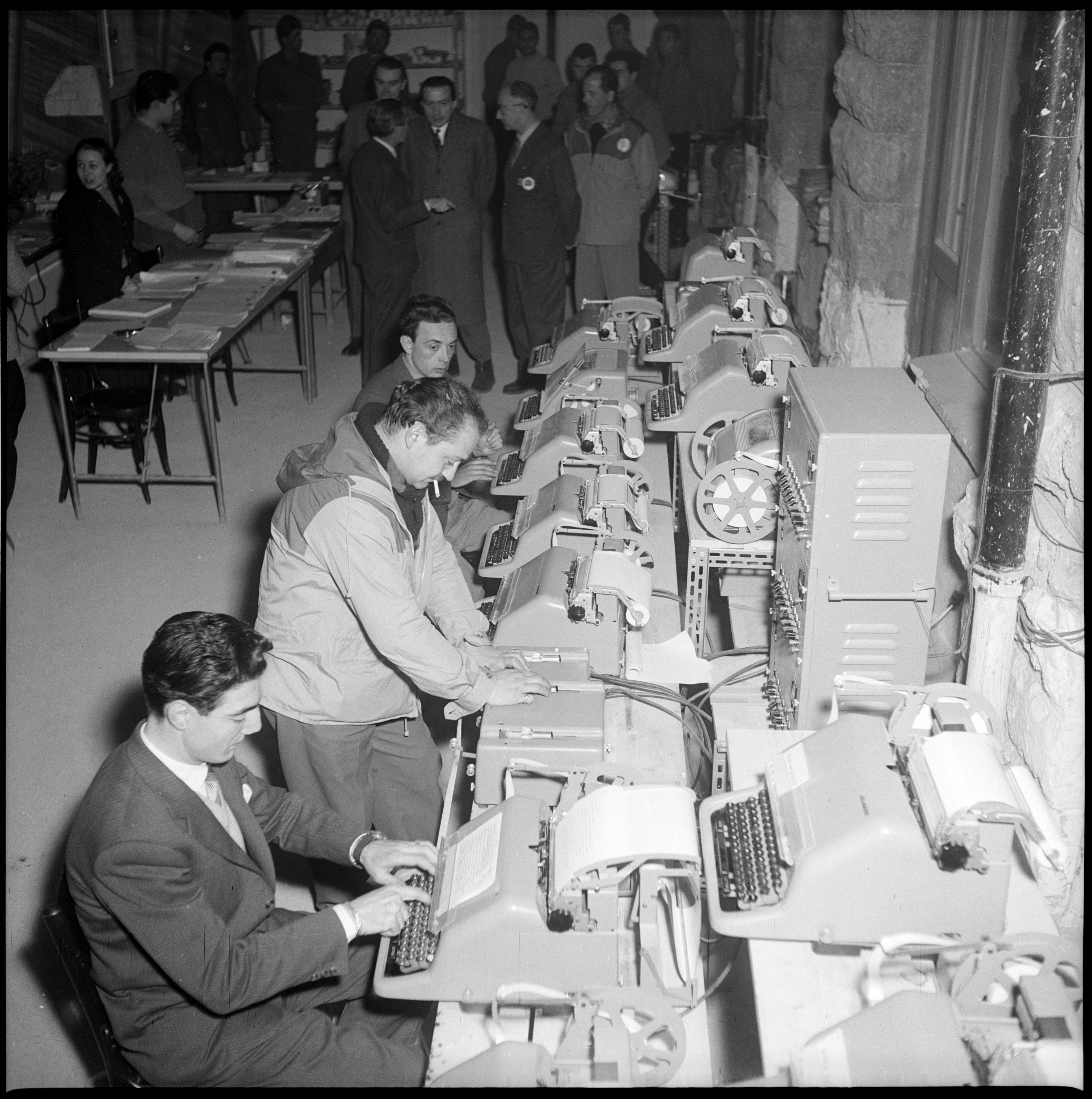
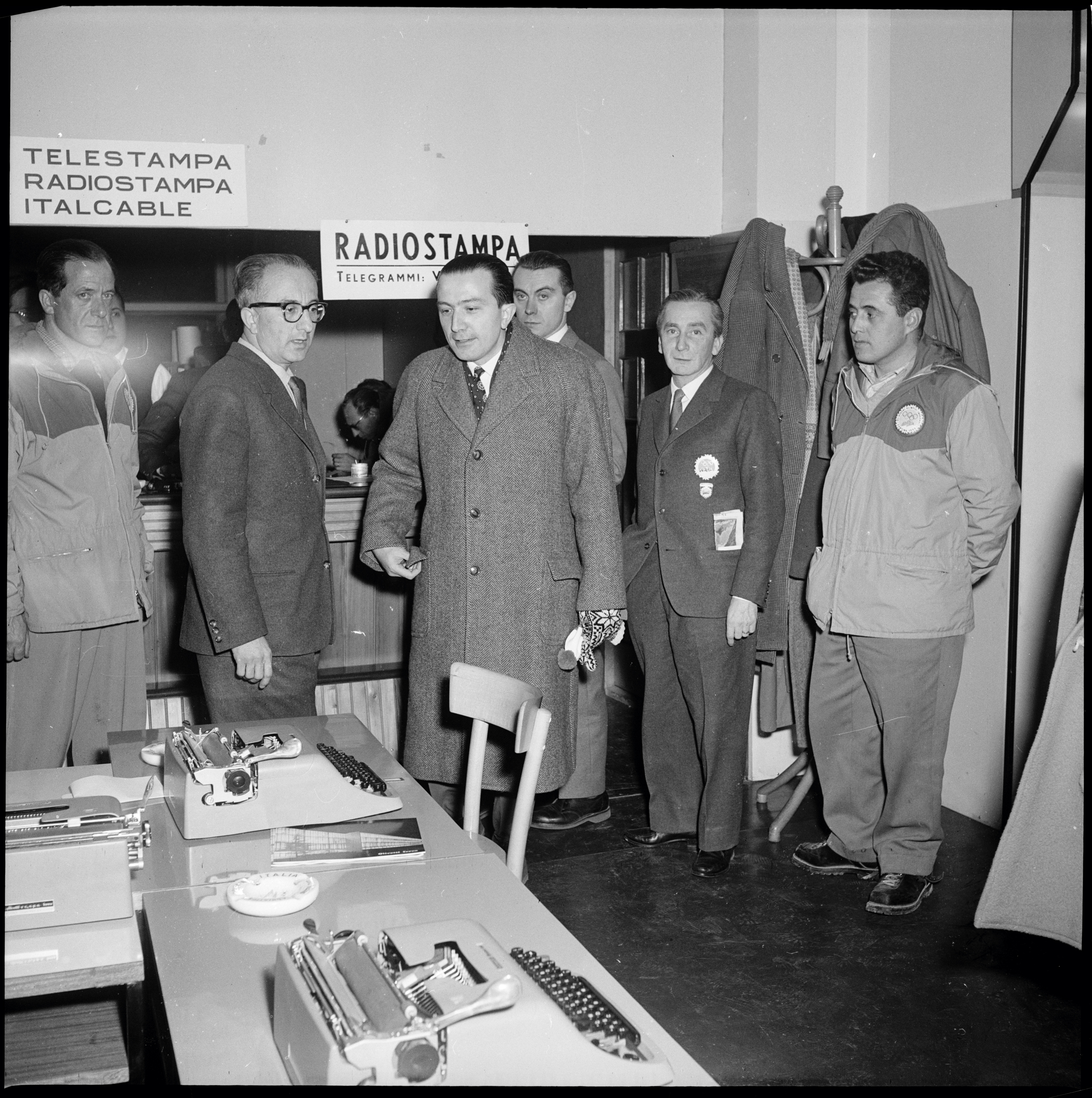
1. The teleprinter room of the Press Centre hosted at the Hotel Savoia in Cortina d’Ampezzo during the VII Olympic Winter Games; in the background, the Director of the Press Centre, Giuseppe Sabelli Fioretti, with Minister of Finance Giulio Andreotti, 5 February 1956
Photograph by Publifoto
Publifoto Archive, Intesa Sanpaolo
2. Journalists in the press room of the VII Olympic Winter Games in Cortina d’Ampezzo, at the Hotel Savoia, equipped by Olivetti with typewriters in the world’s main languages, 5 February 1956
Photograph by Publifoto
Publifoto Archive, Intesa Sanpaolo
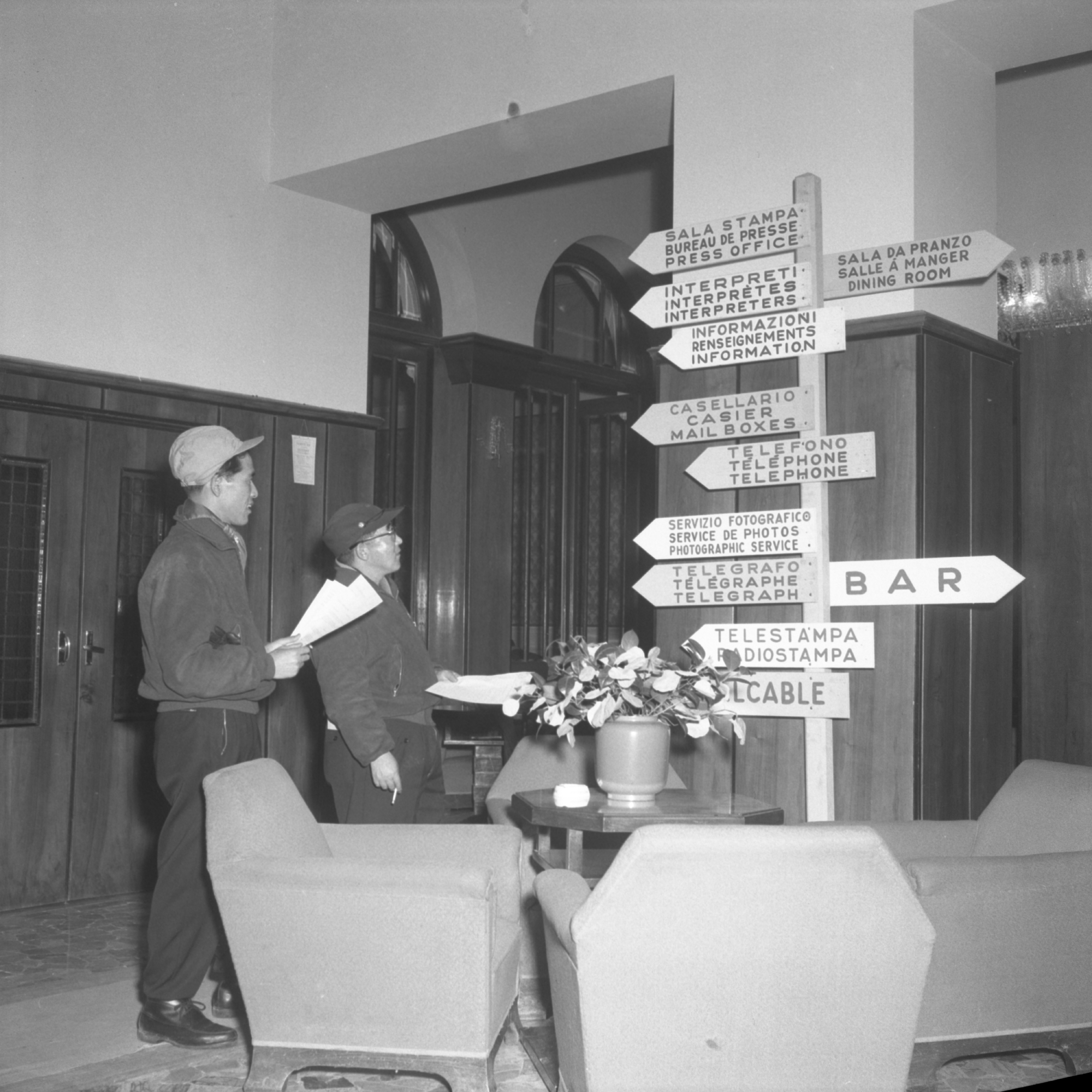
3. Sign indicating the facilities offered at the Savoia Hotel, where the Press Centre was based, 21 January 1956
Photograph by Franco Gremignani - Publifoto
CSAC, University of Parma
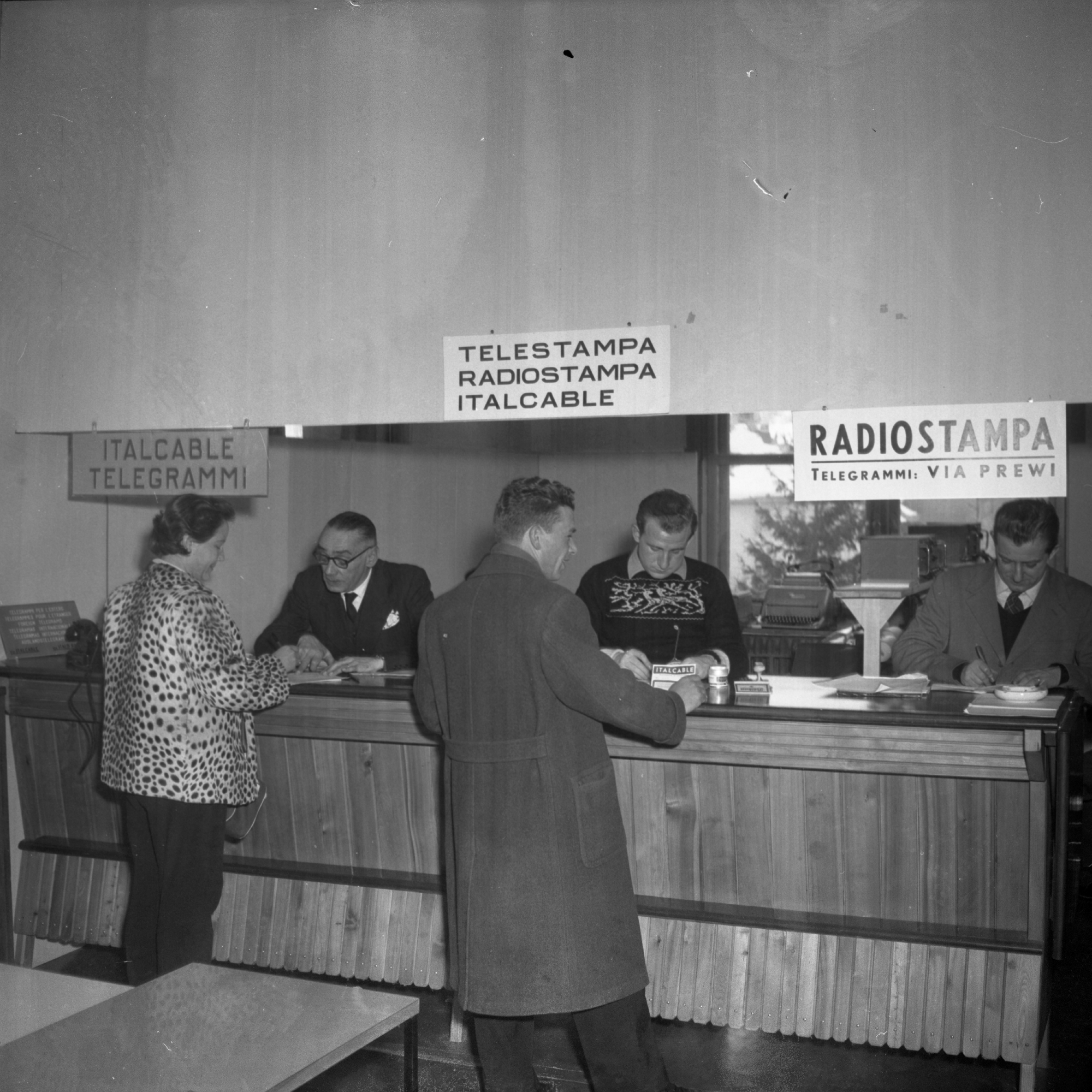
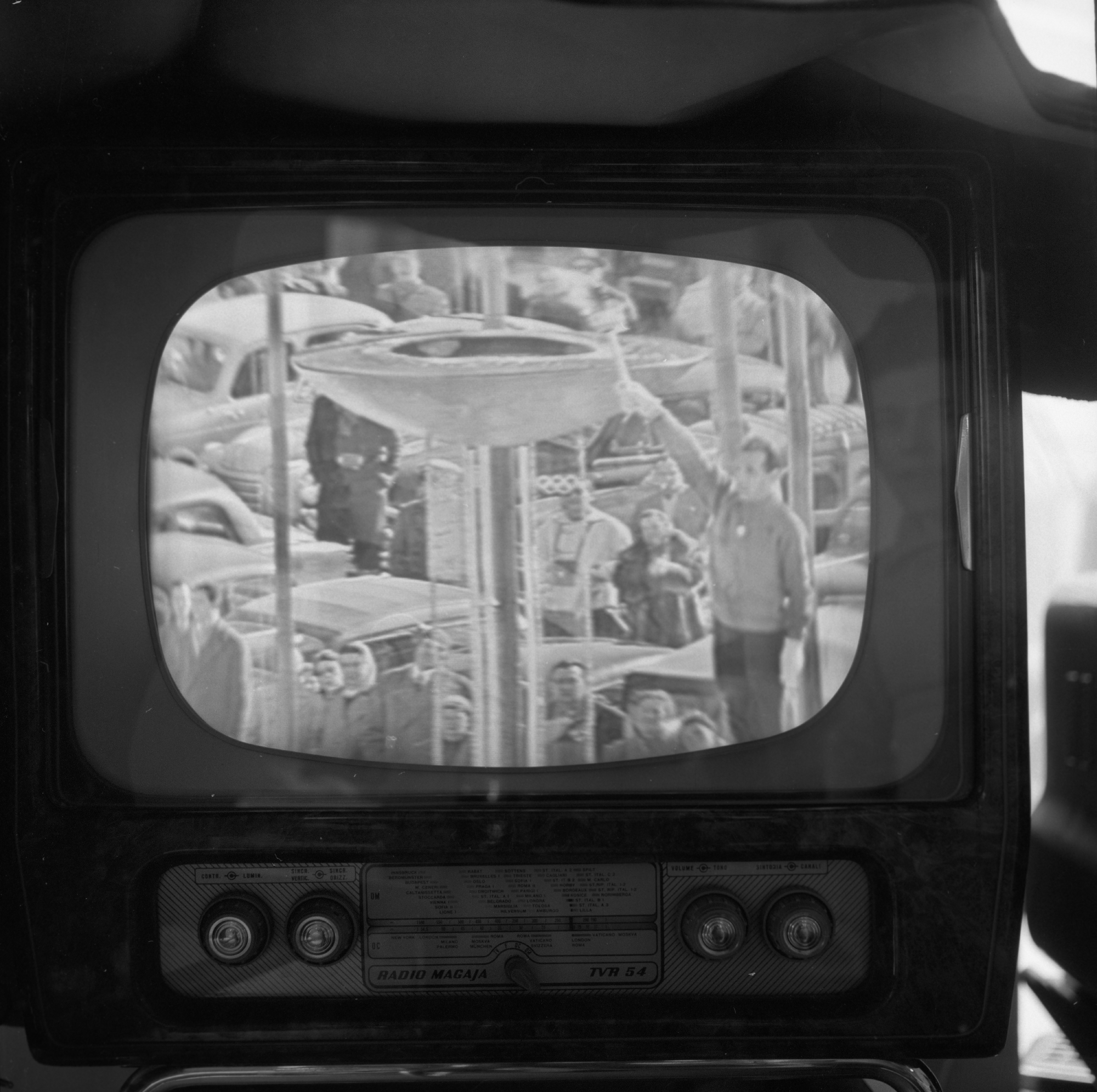
4. The television news, telegram and radio news services at the disposal of journalists at the Press Centre based at the Savoia Hotel, 21 January 1956
Photograph by Franco Gremignani - Publifoto
CSAC, University of Parma
5. Speed skater Guido Caroli lights the Olympic tripod with the Olympic torch, after its arrival from Rome, at the Opening Ceremony, 26 January 1956
Photograph by Silvano Lucca - Publifoto
CSAC, University of Parma
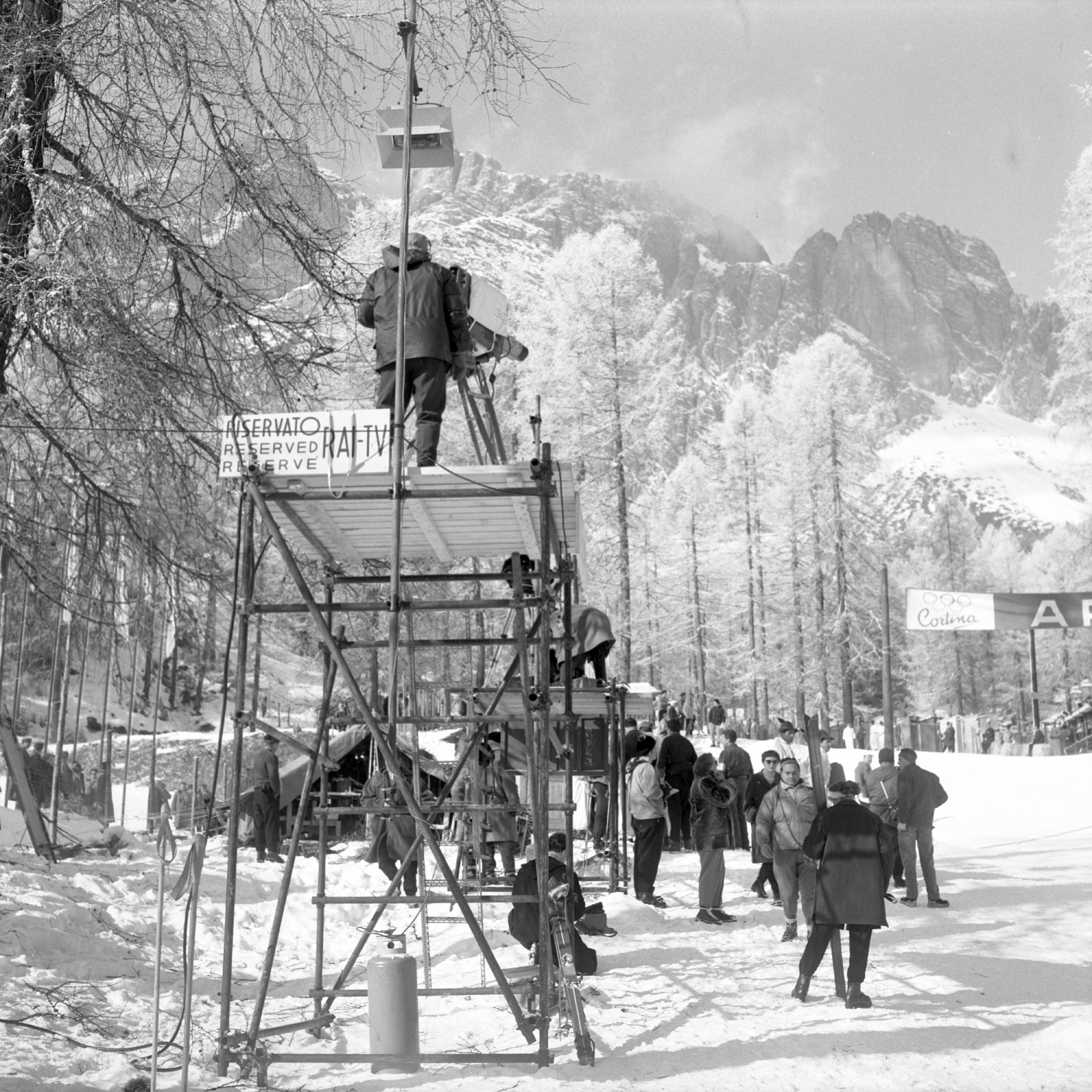
6. Stand reserved for RAI staff, 1 February 1956
Photograph by Publifoto
CSAC, University of Parma
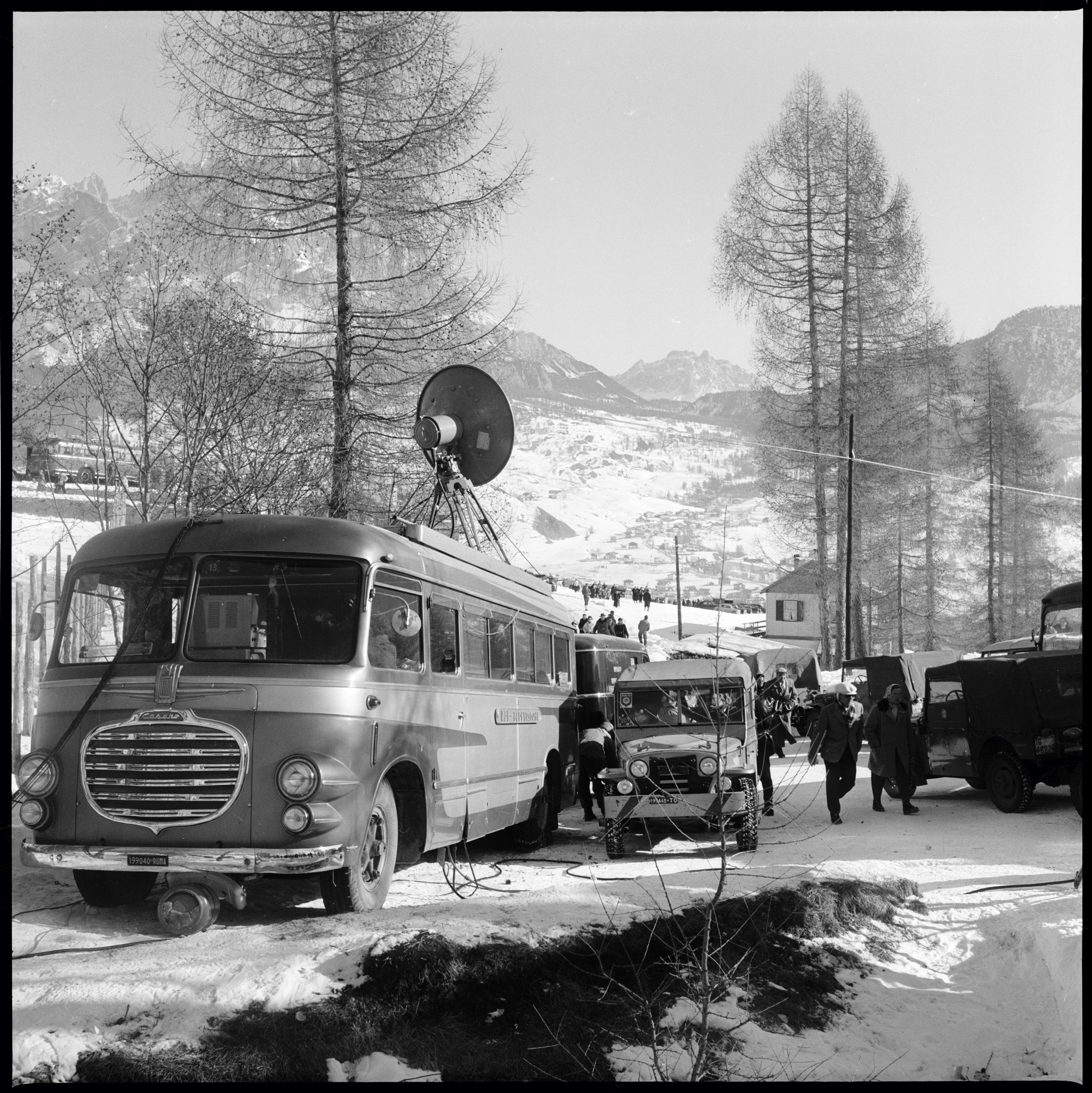
7. RAI’s equipment and vehicles for filming the VII Olympic Winter Games in Cortina d’Ampezzo, 3 February 1956
Photograph by Publifoto
Publifoto Archive, Intesa Sanpaolo
8. The Director of the Press Centre, Giuseppe Sabelli Fioretti (left), showing Minister of Finance Giulio Andreotti the various services available to journalists at the VII Olympic Winter Games, 5 February 1956
Photograph by Publifoto
Publifoto Archive, Intesa Sanpaolo
Last updated 9 February 2026 at 16:44:01


