In Naples, a dialogue between Angelica and Élisabeth, icons of European art
5 November 2026
Intesa Sanpaolo opens to the public at Gallerie d’Italia-Naples the exhibition “Angelica and Élisabeth. The Age of Women Painters”, dedicated to Angelica Kauffmann and Élisabeth Louise Vigée Le Brun, two of the most important painters in the history of art. For the first time, the exhibition brings together their artistic and personal journeys in a direct comparison.
Cultured, independent and cosmopolitan, both artists emerged as leading figures during a period of profound transformation between the end of the Ancien Régime and the birth of modern Europe. The exhibition offers a reflection on the role of women in society and in the art world between the eighteenth and early nineteenth centuries, showing how talent and ambition enabled them to build international careers and earn authoritative positions within a predominantly male artistic system.
Curated by Francesco Leone, Fernando Mazzocca and Elisabetta Rasy, “Angelica and Élisabeth. The Age of Women Painters” features 73 works, including paintings, drawings, engravings and sculptures, on loan from major Italian and international public and private collections.
Among the most significant works on display are the self-portraits of the two artists, both from the Uffizi Galleries: Élisabeth Louise Vigée Le Brun’s self-portrait, painted in 1789 and donated by the artist herself, and Angelica Kauffmann’s self-portrait from 1787.
Two profoundly different personalities
United by natural talent, professionalism and a drive for emancipation, the two artists followed markedly different paths in terms of education, sensibility and artistic choices:
- Angelica Kauffmann, born in Chur in 1741, was an exceptionally versatile artist, excelling in portraiture, religious painting, allegory and above all history painting. Her philosophical, literary and musical culture, together with her command of several languages, contributed to making her a truly cosmopolitan figure, capable of tackling subjects drawn from mythology, ancient and modern history, and literature, from Homer to Shakespeare.
- Élisabeth Louise Vigée Le Brun, born in Paris in 1755, focused her talent primarily on portrait painting, achieving results of outstanding quality. Her career was shaped by her privileged relationship with Marie Antoinette, whom she portrayed extensively, and by her ability to build an international clientele among courts and aristocratic circles.
One of the most compelling aspects of the comparison between the two painters lies in their representation of the Bourbon court and Neapolitan society of the time, which they depicted from different perspectives despite portraying the same circles and protagonists. A key destination of the Grand Tour, Naples served as an important centre of patronage and engagement with international culture for both artists.
Gallerie d’Italia-Naples: a focus on women in art history
The exhibition continues the Gallerie d’Italia-Naples programme dedicated to women artists active in seventeenth-century Spanish Naples. It further develops a broader reflection on the presence of women in art history, highlighting figures who succeeded in establishing themselves on the cultural stage of their time.
The exhibition also shows how the success of Kauffmann and Vigée Le Brun was part of a wider artistic landscape in which other women artists achieved recognition. Works by Adélaïde Labille-Guiard, Sofia Clerk Giordano, Maria Callani, Adèle Romany, Marie-Geneviève Bouliard, Marie Guilhelmine Benoist and Constance Mayer are also on display.
Together with the venues in Milan, Turin and Vicenza, Gallerie d’Italia-Naples is part of Intesa Sanpaolo’s Gallerie d’Italia museum network.
Open to the public from 6 November 2026 to 7 March 2027. For further information, please visit the Gallerie d’Italia website.
Main image, details from:
Élisabeth Louise Vigée Le Brun – Self-Portrait – 1789
Florence, Uffizi Galleries. Roberto Palermo - Claudio Ripalti (courtesy of the Italian Ministry of Culture)
Angelica Kauffmann – Self-Portrait as the Muse of Painting – 1787
Florence, Uffizi Galleries. Roberto Palermo - Claudio Ripalti (courtesy of the Italian Ministry of Culture)
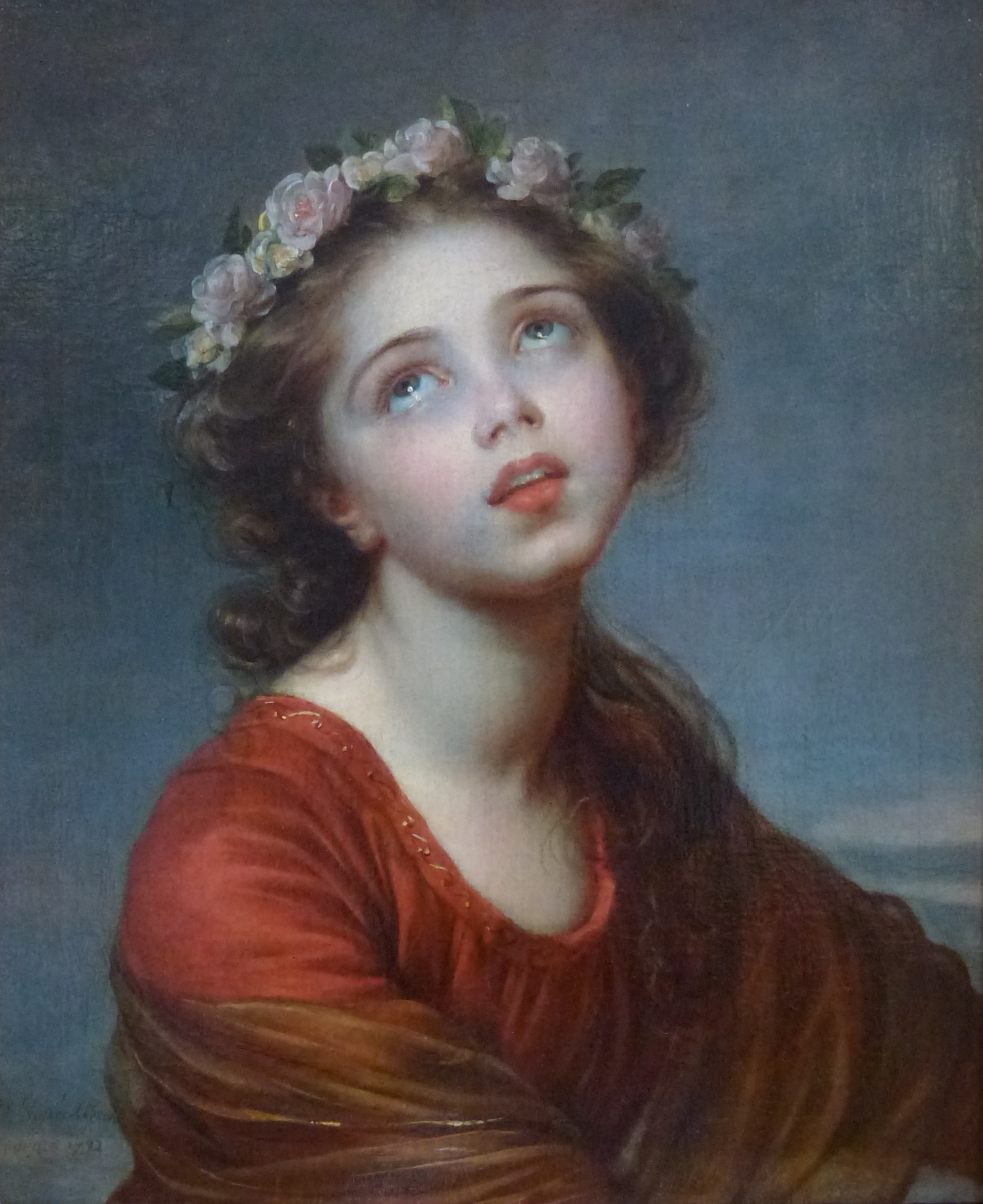
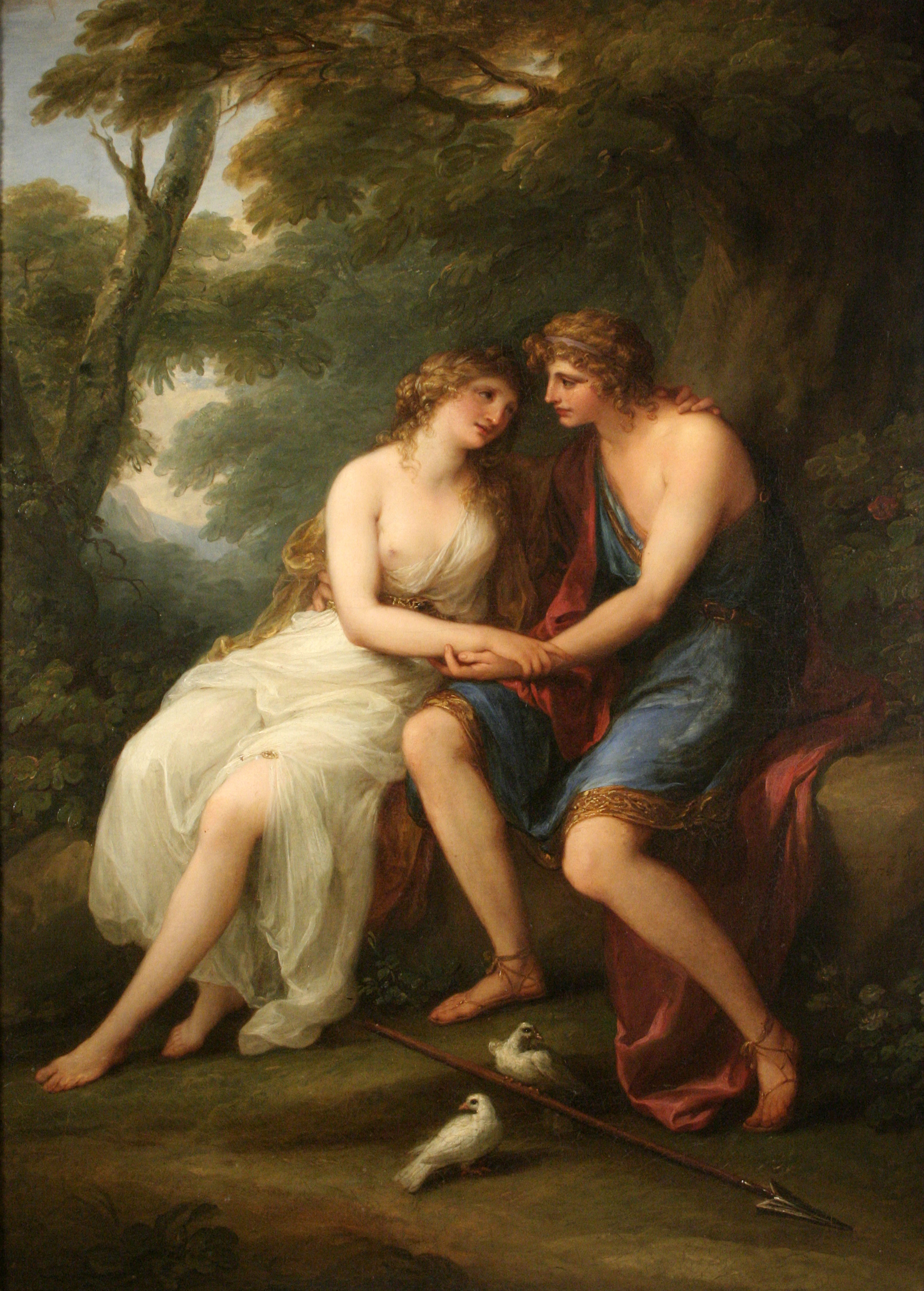
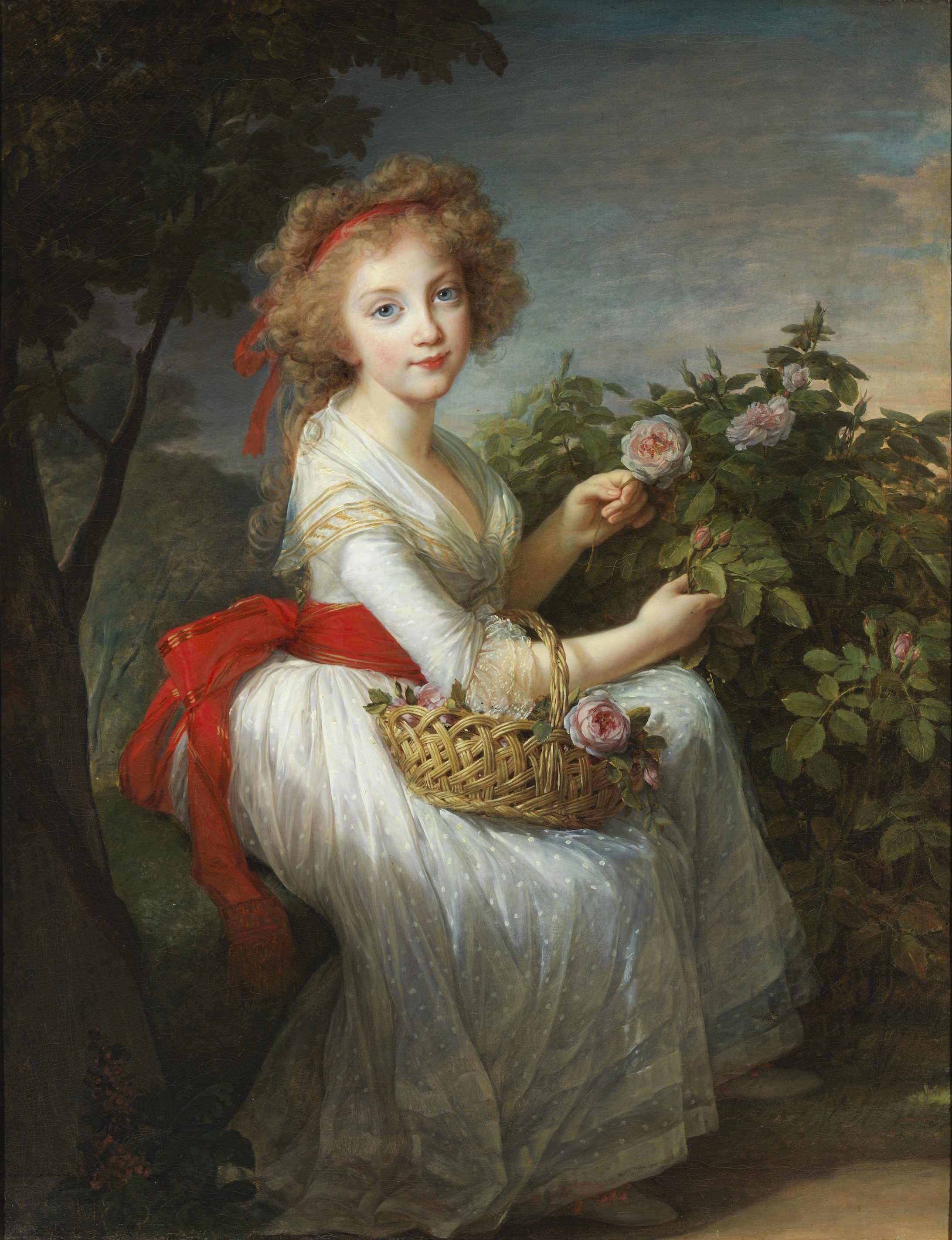
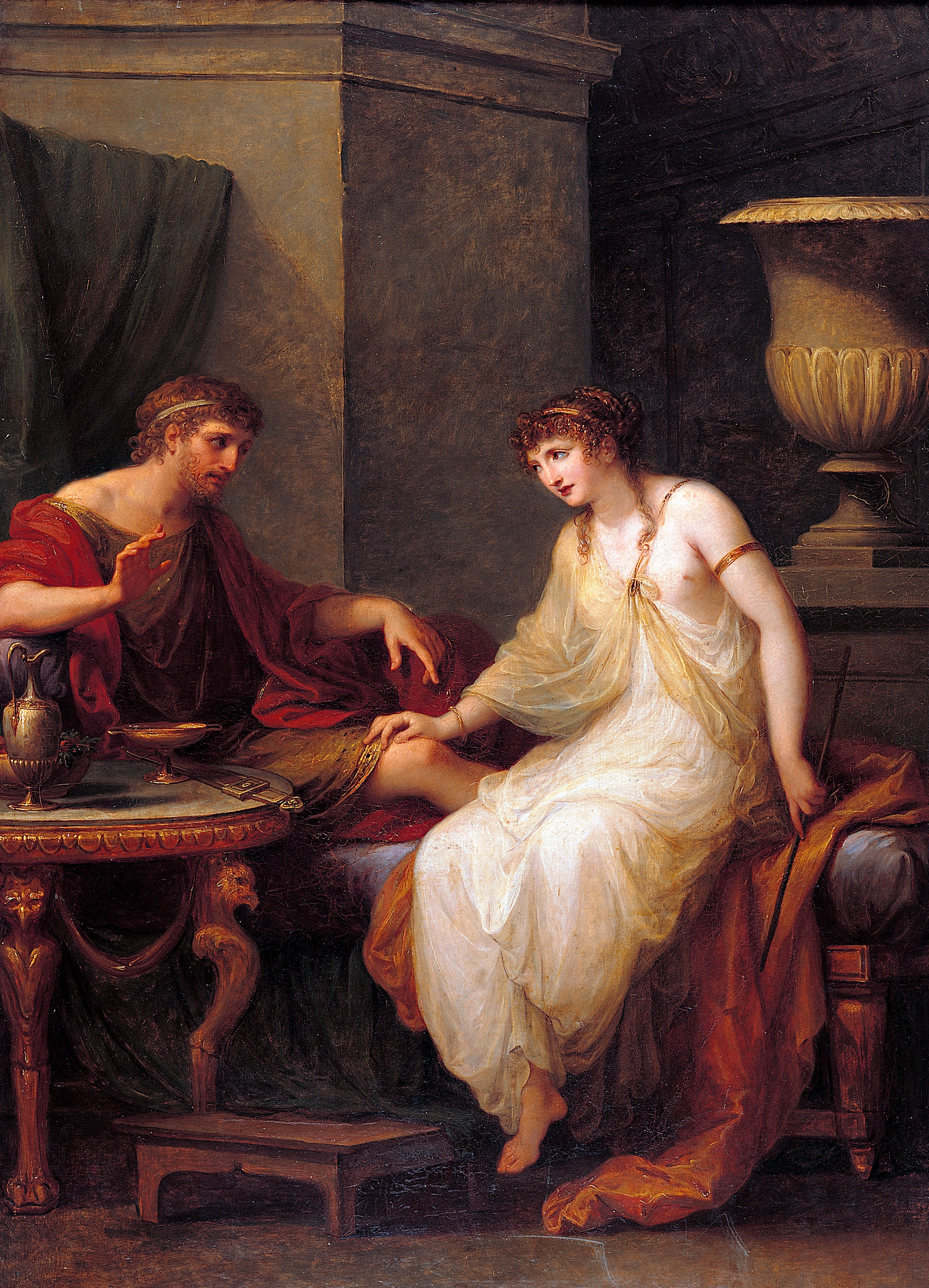
1. Élisabeth Louise Vigée Le Brun
Ritratto della figlia
1792
Olio su tela, 49 x 41 cm
Parma, Complesso monumentale della Pilotta, Galleria Nazionale
“Su concessione del Ministero della Cultura - Complesso Monumentale della Pilotta-Galleria Nazionale”
2. Angelica Kauffmann
Venere e Adone
1786
Olio su tela, 128 x 94 cm
Charlottesville (Virginia), The Fralin Museum of Art at the University of Virginia, acquisto del museo
tramite il fondo acquisizioni dei soci
“Courtesy of The Fralin Museum of Art at the University of Virginia. Museum purchase with Membership Acquisition Fund, 1976.25”
3. Élisabeth Louise Vigée-Le Brun
Maria Cristina di Borbone, principessa delle Due Sicilie, mentre coglie delle rose in un giardino, 1791
olio su tela, 123 x 91 cm
Napoli, Museo e Real Bosco di Capodimonte (inv. OA 7226)
4. Angelica Kauffmann
Circe seduce Ulisse
1786
Olio su tela, 139,7 x 104,8 cm
Charlottesville (Virginia), The Fralin Museum of Art at the University of Virginia, acquisto del museo tramite il fondo acquisizioni dei soci
“Courtesy of The Fralin Museum of Art at the University of Virginia. Museum purchase with Membership Acquisition Fund, 1976.24”
Last updated 5 November 2026 at 14:29:14


